Linking Probabilistic Distributions in Game Results to Hierarchical Access Within Portable Entertainment Platforms
Devon Vogel · Jun 28, 2026
Linking Probabilistic Distributions in Game Results to Hierarchical Access Within Portable Entertainment Platforms
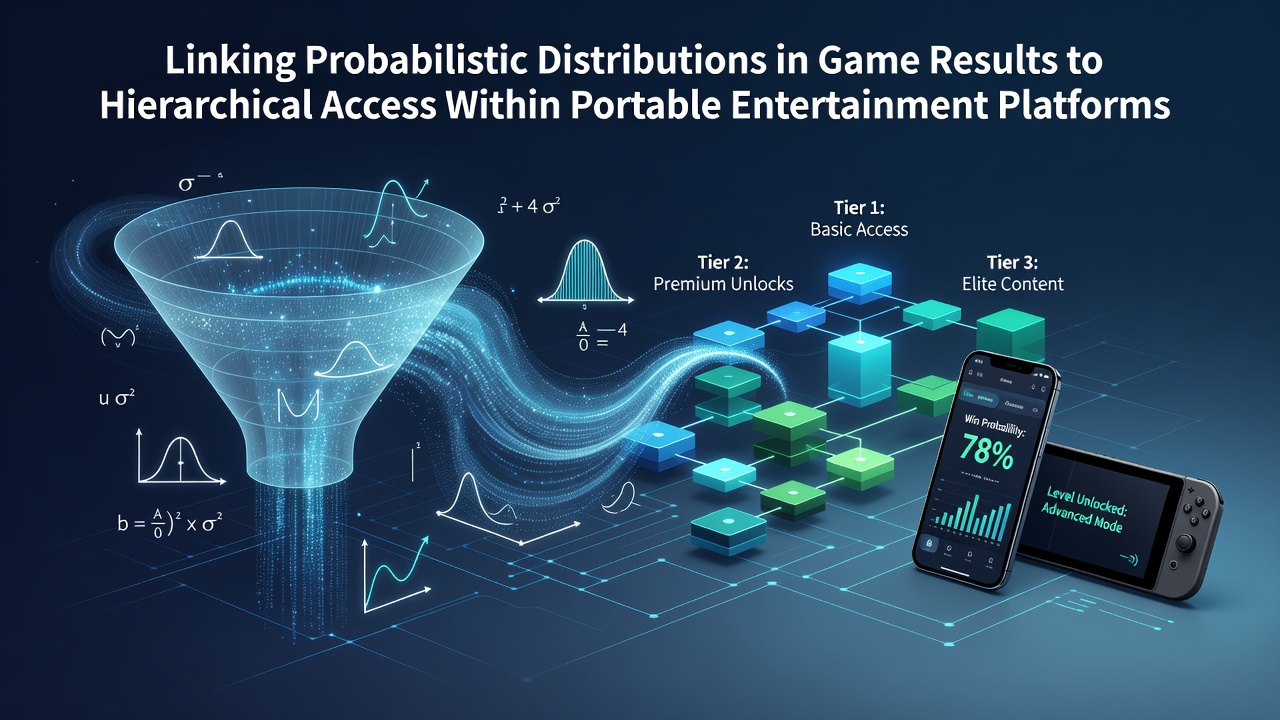
Portable entertainment platforms on smartphones and tablets rely on mathematical models to shape user experiences through game outcome patterns, and these patterns connect directly to how users gain access to higher platform tiers, features, and content layers. Researchers have examined how results in mobile games follow specific probability distributions such as binomial, Poisson, or normal curves, while platform architectures use those same outcomes to control progression through ranked levels or subscription hierarchies.
Data from mobile analytics firms in early 2026 shows that outcome variance influences retention rates across different game genres, and developers adjust distribution parameters to balance engagement with tier advancement speed. Studies indicate that tighter distributions around expected values keep users moving steadily through early hierarchies, whereas wider spreads create occasional spikes that accelerate select users into premium segments.
Distribution Models in Mobile Game Mechanics
Game designers implement probabilistic systems where each session produces results drawn from defined statistical families, and these systems feed directly into algorithms that determine eligibility for advanced access points. A binomial distribution might govern success rates on repeated challenges, while a normal distribution could model cumulative score spreads across thousands of players. Observers note that platforms track these distributions in real time to set thresholds for unlocking new character classes, expanded maps, or social features reserved for higher tiers.
According to reports released by the Entertainment Software Association in June 2026, mobile titles with adaptive distribution tuning saw measurable shifts in average session length before users reached mid-tier status. The same datasets revealed that platforms using fixed distributions maintained more predictable advancement curves, allowing developers to forecast when certain percentages of users would qualify for elite content bundles.
Hierarchical Structures and Access Gates
Portable platforms organize user accounts into layered hierarchies that require demonstrated performance metrics before granting elevated permissions. These gates often combine time-based requirements with performance thresholds derived from the underlying probability models. Users accumulate points or achievements that follow the same statistical patterns as game results, and crossing into the next tier depends on sustained deviation from mean outcomes rather than single exceptional sessions.
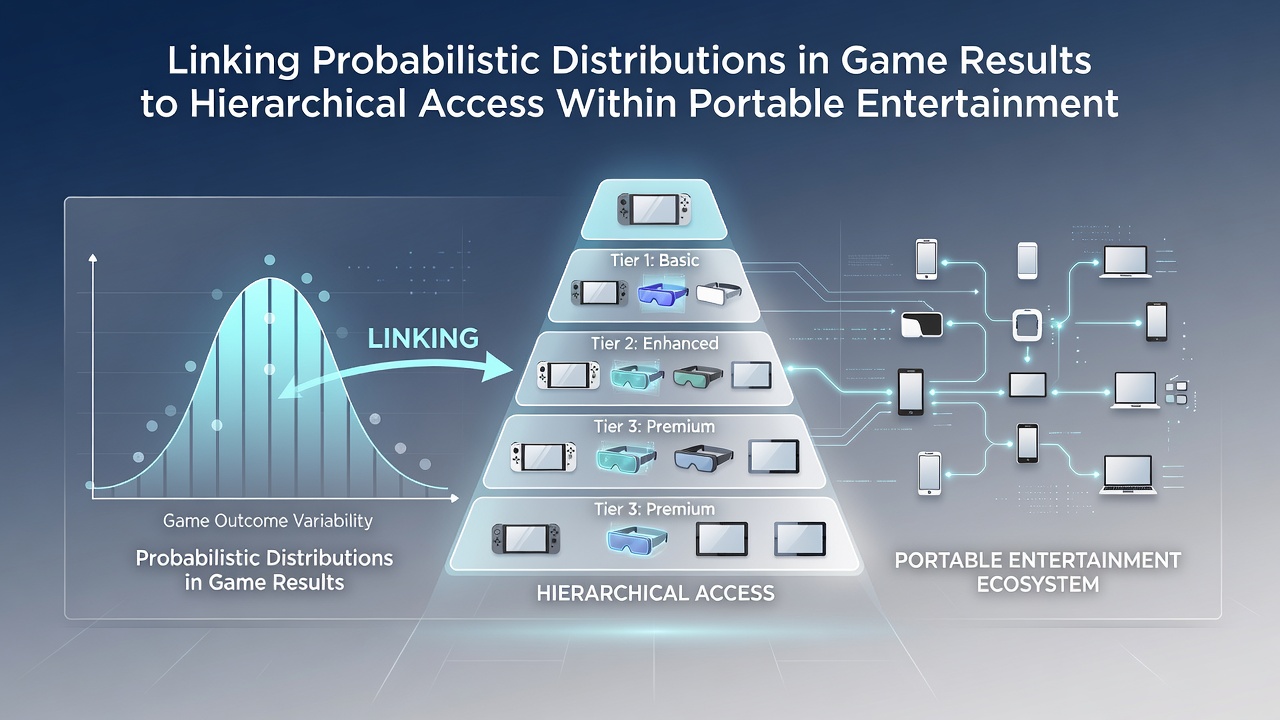
Industry data compiled by the Australian Interactive Games Association during the same period highlighted correlations between distribution skewness and tier migration rates. Platforms with positively skewed result patterns tended to funnel more users toward upper hierarchies within the first thirty days, because occasional high-value outcomes provided the necessary momentum to clear access barriers.
Empirical Connections Between Outcomes and Advancement
Academic researchers from institutions in Canada and the European Union have published findings that quantify how specific distribution parameters affect the time required to reach successive access levels. One analysis examined over two million mobile accounts and found that variance reduction strategies shortened the interval between tier promotions by measurable margins, while increased variance produced longer plateaus interrupted by rapid jumps. These patterns appear consistently across puzzle, strategy, and simulation genres hosted on major app marketplaces.
Platform operators adjust distribution parameters in response to aggregate user behavior, and regulatory bodies in multiple jurisdictions have begun requesting transparency reports on these adjustments. The Canadian Centre for Digital Media Research released a June 2026 brief documenting how such parameter changes influence equitable access across demographic groups, noting that certain distribution shapes correlate with faster advancement for users who engage during peak hours.
Platform Implementation Examples
Major portable entertainment providers integrate outcome tracking directly into their backend systems, allowing real-time recalculation of distribution curves based on cohort performance. When a critical mass of users clusters around particular result ranges, the platform recalibrates reward multipliers or difficulty scalars to maintain desired progression velocities toward higher hierarchies. This closed-loop approach keeps the statistical properties of game results aligned with the architectural goals of tiered access.
Those who have analyzed large-scale telemetry datasets observe that platforms employing hybrid distributions, combining elements of both uniform and exponential models, achieve more stable advancement rates across diverse user populations. The resulting hierarchies reflect not only individual skill but also the engineered probabilities that govern every interaction within the application environment.
Conclusion
Linking probabilistic distributions in game results to hierarchical access within portable entertainment platforms creates a feedback system where statistical properties of outcomes directly shape user trajectories through ranked structures. Evidence from multiple regions and research organizations continues to document these connections, and platform operators refine their models accordingly as new data emerges each quarter. The relationship remains central to how mobile entertainment applications manage engagement and content delivery at scale.